
by Amanda Millet-Sorsa
Roxane Revon joins Amanda Millet-Sorsa for a fireside chat at 68 Jay Street bar in DUMBO, Brooklyn NY for a conversation about her work and transition from theatre to multimedia art. Revon works with photography and video and uses plants, water, and transparent materials like reused plexiglass in her installation work alongside a practice dedicated to drawing. She’s exploring intersections between humans and vegetal beings. She is a French artist from the South of France near Aix-en-Provence, who first studied political philosophy at the Sorbonne in Paris, then escaped to New York City in 2012 to pursue a life in theatre as a director: co-founded her theatre company “L’Atelier Theatre NY” and teaches at the Communications & Theatre Arts department at John Jay College since 2014. In NY she found freedom from French society and its hierarchy, and after experiencing a dark time during the Covid-19 pandemic, left the world of theatre for a more studio-based image-making practice, that of multidisciplinary art.
AMS: Roxane, what drew you to the disciplines of philosophy and theatre?
RR: As a child, I was introverted as I went through life and theatre was the first encounter with the adrenaline of understanding many human beings. In theatre you play with identity, your sense of life, and the way society sees you, whereas philosophy plays with broader ideas and how society puts them together. What are beliefs? It could be religious or philosophical thoughts. When my mother brought me to a small theatre when I was 6 years old in Fuveau, where we lived, I immediately felt this expansion as a young child. As an adult, the encounter with philosophy was another kind of expansion, it was much more intellectual.
Did you see a connection between the intellectual world of philosophy and the “identity changing world” of theatre?
The simple connection is words. I was interested in Plato because most of his works are dialogues. The confrontation of many points of view are what brought me to theatre and then philosophy.
Today, you still have ties to theatre, you teach theatre to your students at John Jay College, and you do scenography for ballet– it seems performance is a part of your life. What is it about making work in the studio that drew you and how did your process begin?
I was a little tired of the world of man and I wanted to expand and feel what’s around us in plants and animals. When I was directing, I was the mother, the confidante, the shrink, and the director of people. I gave everything and didn’t have any energy left! I couldn’t find words anymore…the change came during a time in my life when I was getting divorced and changing my life completely. The studio with lines, plants, and colors, resuscitated the sense of feeling alive.
In your work as an artist from what I’ve seen you’ve had a momentous year. This past year I saw your first solo show at the FIAF gallery uptown, curated by Lola Siena and Tatyana Frank and a selection of different parts of your work at “Roon’s Rhizomes” curated by Vanessa Selk inaugurated the exhibition space at Cinema Supply, a new arts venue in Chelsea. What I saw is that there is a theme leaning towards plants. We see the body of plants up close: their stems, roots, and mirror reflections. Could you speak more about what it was about plants specifically that drew you to this subject matter?
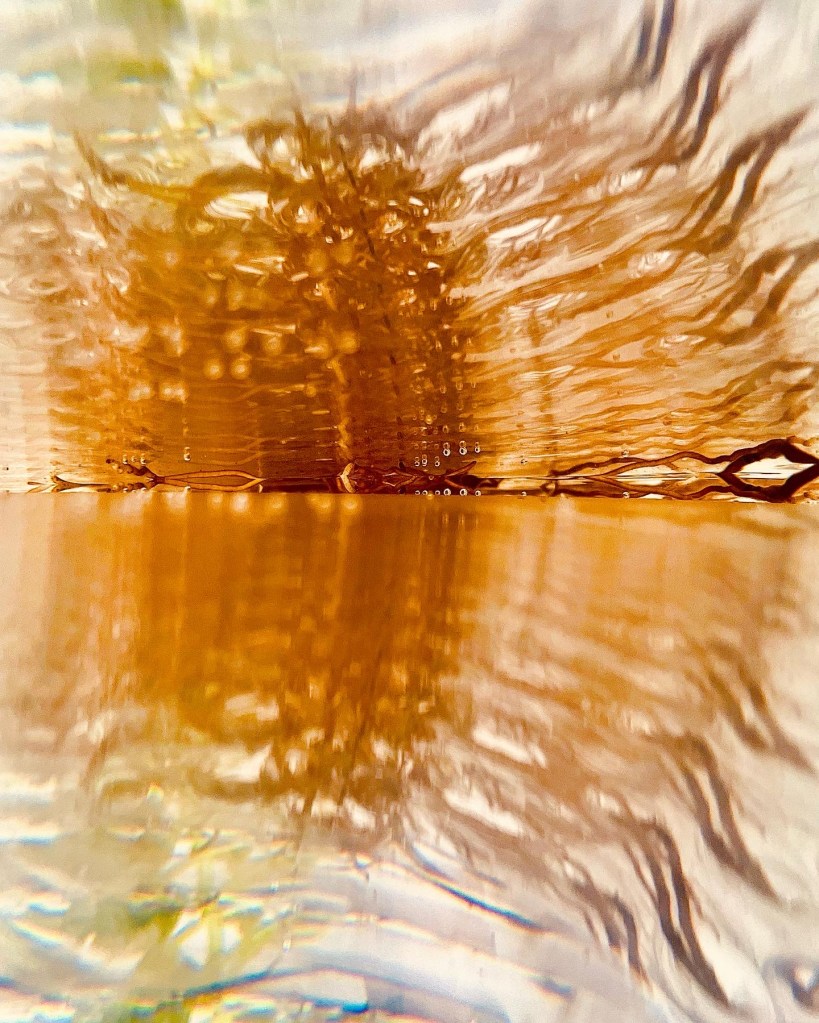
I was reading books by Philippe Descola and Baptiste Morizot on the many ways humans experience their relationship to nature and I wanted to find ways to go beyond either a naturalistic (from an outside point of view) or an abstract (inner point of view) way of representing the vegetal world. I wanted to visually show the link between different living entities. I also was always drawn by transparency and have been attached to non-human things near my parents’ home where I find fish, cats, and trees. When I was alone in a very cold environment, at a residency in Portugal, I watched plants grow in this transparent vase that I made and started taking pictures. It was a sensual and essential moment during a dark period in my life and it helped me understand that there was life. I wasn’t shrinking, I was continuing. I started to love the variety of aesthetics that came from some very fast photography stills of these plants in transparent vases.
Are there artists or thinkers that you admire in particular?
I know we are in a moment where BioArt is important. I was reading an anthropologist called Philippe Descola about how to go beyond nature and culture and that this duality is basically killing us. Since René Descartes, after the Age of Enlightenment, and then the Revolution period, we started to see nature as an exterior thing instead of a part of this community. It brought my attention to Bio-Artists like Anicka Yi, Pierre Huyghe, or Meg Webster and thinking about symbiotic relationships that things have towards one another. I would love to be part of this moment to reconnect collectively with what life is. The expansion brought about by art means that we can be linked to many things in a very sensual, physical way, and these can combine with science. For me I usually work in anthropology, philosophy, and art, and now science, thanks to this residency in Cold Spring Long Island, NY where I encountered the work of David Jackson and could better grasp how each plant builds its own architecture, adaption and communicates information through RNA, plasmodesmata, and protein cells.
Is research a big part of your process?
Yes, but it’s not always. I love reading at least three times a week in the park.
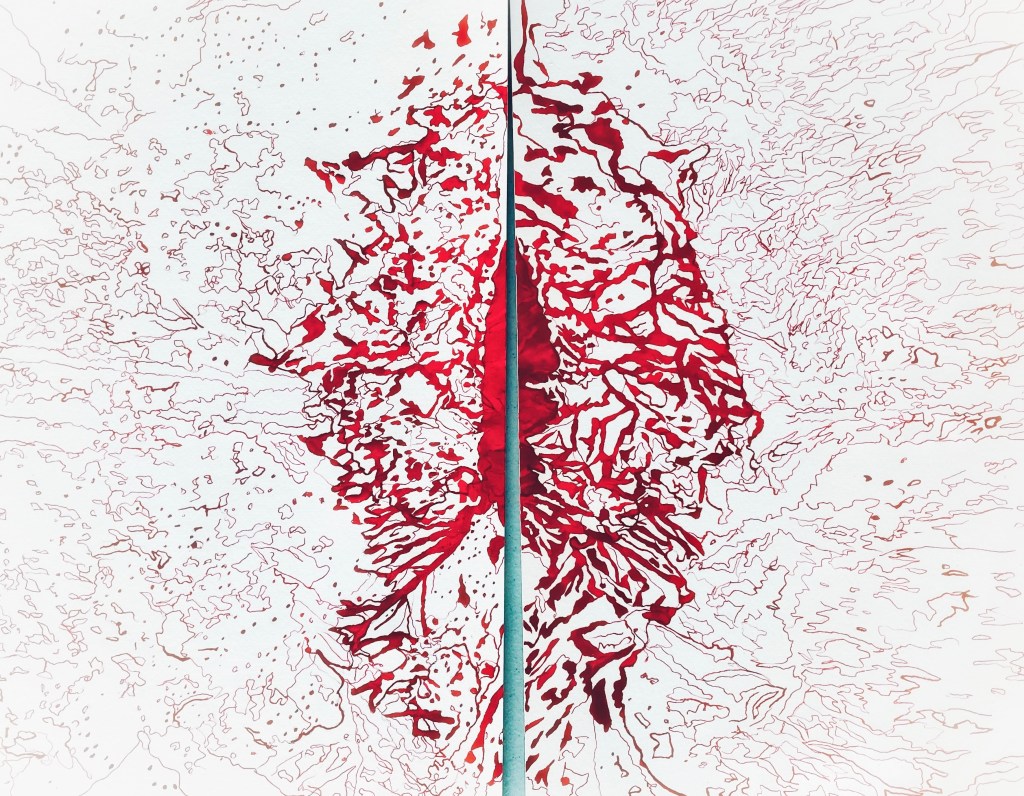
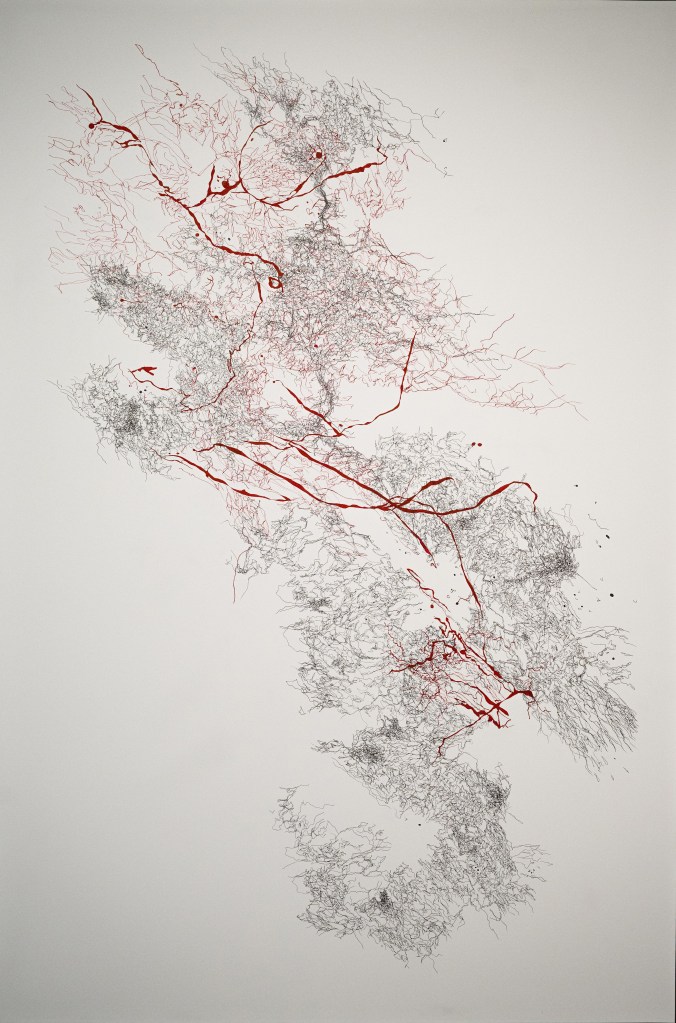
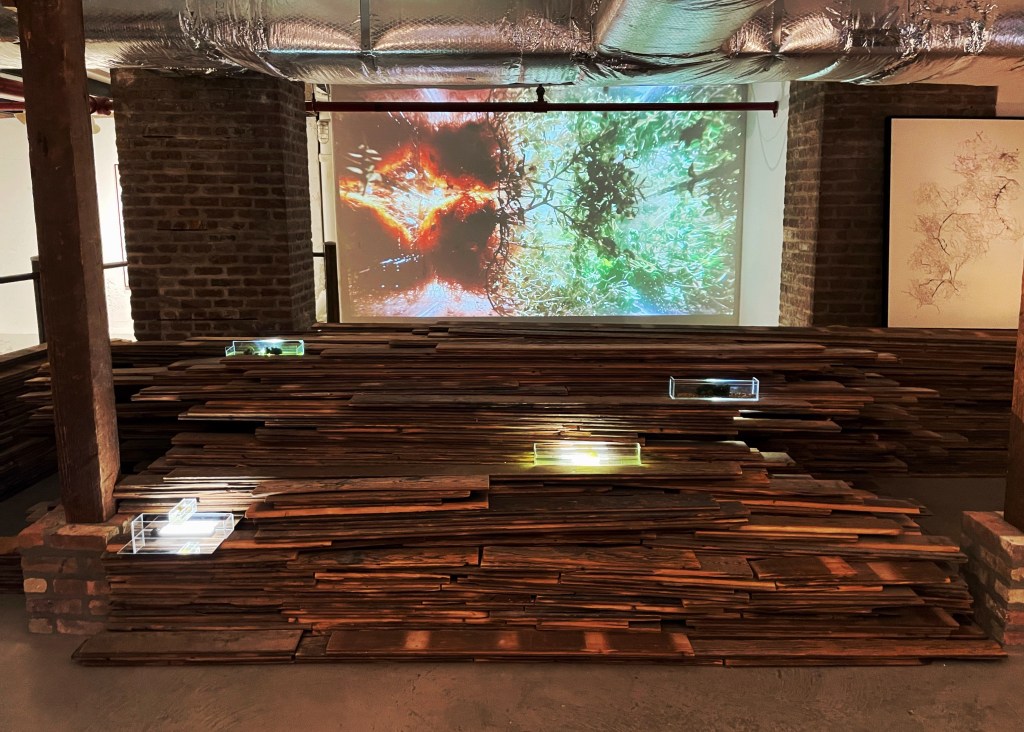
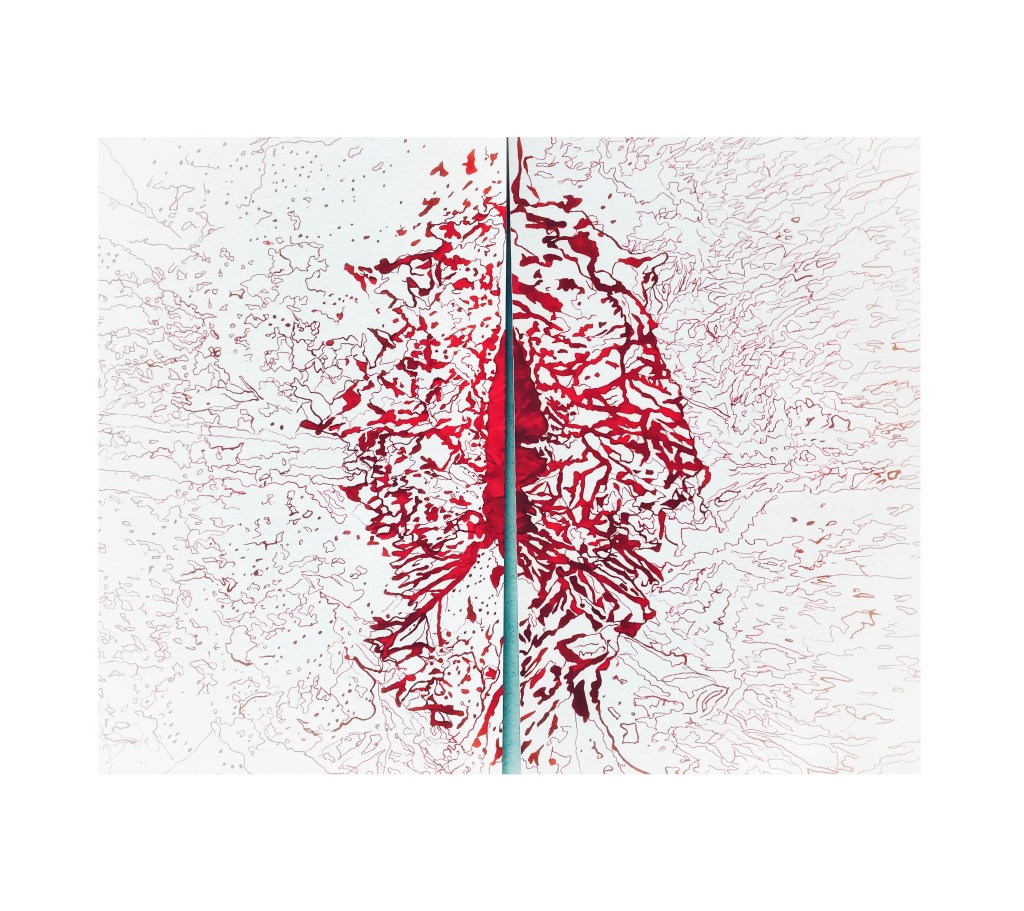
I could see the stage direction at work at the Cinema Supply show! I thought it was such a surprising space. It has the grittiness of warehouses in Brooklyn but it’s in an incredibly elegant building in Chelsea with a history of cinema. It feels like a cave where you might see a long-lost plant growing and bringing us back to something living. There were drawings on black paper done with colored chalk, and also these much bigger drawings focused on line in black and red and the silhouettes or the veins of plants.
Drawing is my personal, sensual process to have a link with whomever it could be– a plant or whom I’m working with and that’s essential to my work.
Are those preparatory studies for you?
The small ones yeah, but then the bigger ones are more abstract versions of these plants or of specific geographic locations. The installation work for instance would be a lot more thoughtful and developed work. I use my preliminary photo and video research work in both my large drawings and my installation work. But I need both. If I stop drawing, I will feel dry.
In that exhibition there was a play with reflection and scale. We see installations with the roots of plants that are placed in transparent aquarium-like objects of plexi glass full of water. Then we see print photographs and projected video of the plants up close so we can see the roots of plants and also their mirror reflections on the sides of their containers.The whole installation seems very delicate and fragile. Do you seek to create instances where transparency, light, and reflection meet? Could you speak more about its role in your work?
I use hydroponics for growing my plants for now because it’s easier to reveal the roots of my plants. Using video was very interesting because it creates lots of atmosphere. There are two ways of showing plant roots: one is taking plants that grow in the ground, through cuttings, and watching the plant procreate. I remember doing that for the first time a year ago and I felt I was killing my mother! It was something weird and using this transparent material was a way to feel and reveal and then on the second level it was a way to reflect on contradicting thoughts. Today we can create aquaponic systems to grow plants indoors with light and energy thinking it’s better for everyone because it requires less soil and easier management. But it requires electricity and plastic. We are in a moment right now where we’re trying to play with nature and bring it back to us, but at the same time I don’t know that we’re really going beyond the culture-nature duality.
Why is that?
I think that our job as artists is really to go beyond that and we’re not sure what science or religion brings. We should have links to whatever we have around and our life is profoundly changed by even a tree that we see every morning. There is this chestnut tree in my parents’ garden that really changed my life. I would just be up there and be with my thoughts, but he (the tree) brought me up there.
And speaking of collaboration, since the work that you do in your studio is more solitary, you have time to think and research and perhaps question yourself and your environment. When you worked collaboratively on the scenography for choreographer Jessica Lang recent piece “Shades of Spring” (2022) with its world premiere at the Joyce Theatre this past year, what was your approach and what kinds of questions would come up in that exchange?
I love collaboration. I approached her with my work and as she liked it, she brought me into this project. She would base her choreography on what I would do visually so that every time I would send her something, I would see how she reacts, and then send her another variation. It was a conversation. Since she was going to build her choreography on the atmospheres set by my videos and Joseph Haydn’s music, each movement had to be extremely different in rhythms, colors, and vibrations. Each video is a view of plant roots, stems or flowers vibrating in water to the rhythm of the music and the dancers’ movements. She chose six videos from 1000+ that I proposed and then created her work and movements based on the atmosphere of the video, in addition to the colors of Jillian Lewis’ costume design. When you work with someone who is very good (with no big ego interfering all the time) and intelligent… we could feel each other. There were moments when I thought these two women are my aesthetic artistic soulmates in the world. It was magical, a dream team, because we never had fights, or strong confrontations of points of view, it was very fluid. We don’t have the same ideas or path, in readings and thoughts, but we found each other.
This year you’ve been the beneficiary of art residencies at the Lower Manhattan Cultural Council on Governor’s Island, Cold Spring Harbor Laboratory in Long Island, and you’re going to spend the rest of 2023 at Cinema Supply. How have these experiences contributed to your art making?
I love having the frame of time when I work and then knowing that there is someone behind me, allowing me to work. I think residencies for artists are important because you meet new people and artists that I really love and I’m still in contact with. Even though I’m connected with what I’m doing, having the sense that there are other people who are doing the same thing for different reasons, it’s motivating, and when I met you, it’s the same thing. The fact that you know what it takes to be an artist. Well artist is a big word but what it takes to wake up and do something that for many people isn’t profoundly useful.
Utility comes off as especially important here in the US, but in France isn’t disutility more acceptable?
In France you’re only an artist when you’re well-known or after you’re dead. And here you can say whatever you want about yourself, people just don’t care, so I feel “artist” carries even less weight. Before I would never say that I’m an artist and I think now for a year I started to say this word.
Do you think there is something vital about NYC for you to make your work?
Yes, because I could be whatever I want. I could be a King Frog and nobody cares. But the counterpart is you feel lonely from time to time when you’re lost in the vast sea of NYC, but I think I prefer that rather than trying to be recognized all the time, which is the pressure faced in French society and it is tiring. NYC is vital. The only problem with NYC is the fact that it’s so expensive.
What are you hoping to do this year?
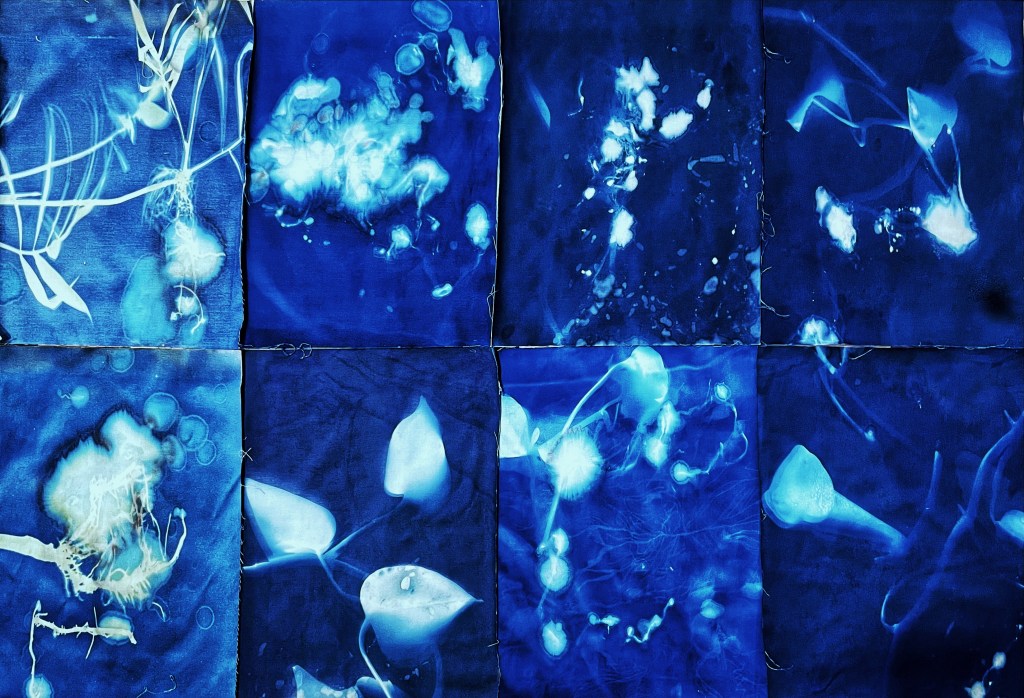
I started working with cyanotypes and other kinds of techniques and procedures. My main goal this year would be to create a show called “Hydroponics Tango”, that will go deeper into this symbiotic relationship with plants. I’m conflicted between the scientific and intimate world of plants. I’m working with a scientist friend to understand how we digest plants. Hopefully it will be richer, maybe crazier and lead to an exhibition at some point next year either end of Spring or Fall 2023.
| Amanda Millet-Sorsa (US/FR/FI) is an artist, art writer, and arts worker in New York City. |
 Theorema
Leave a comment